
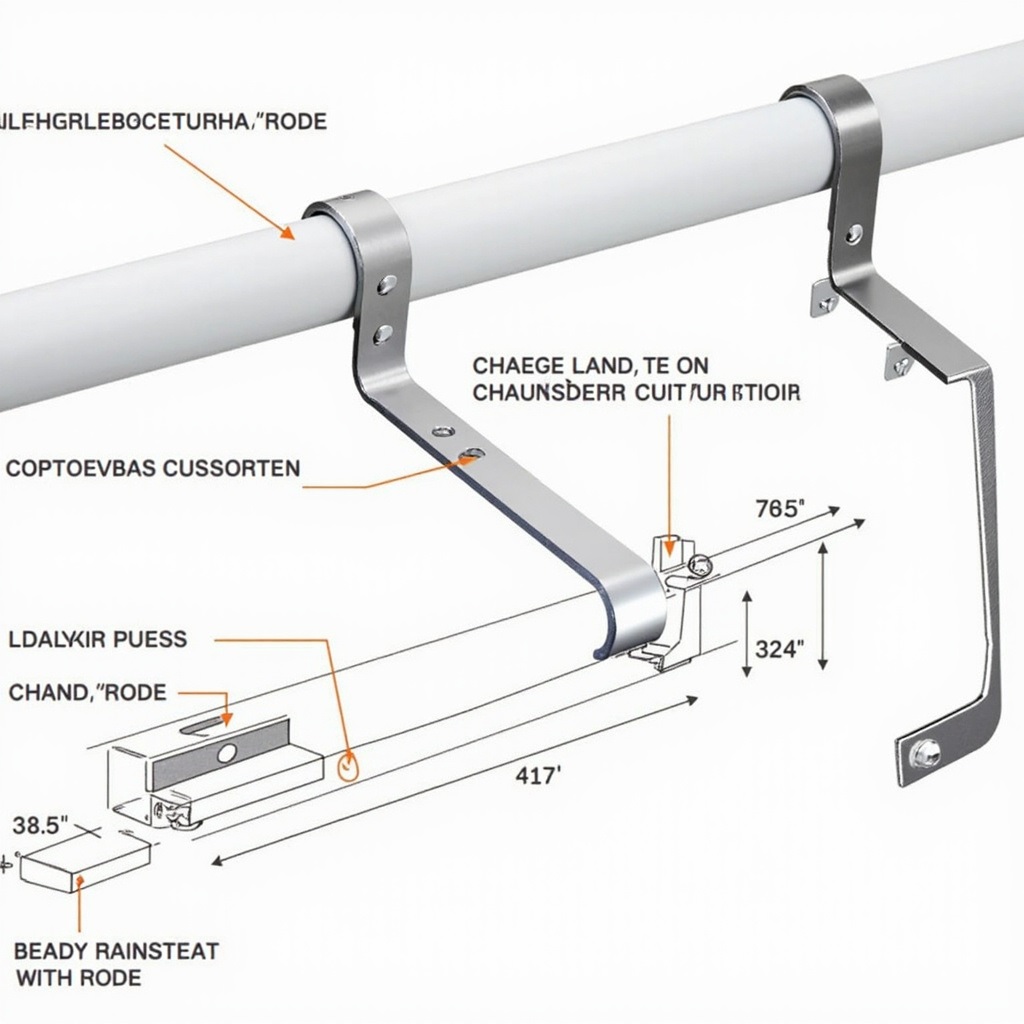
 You have spent hours picking the perfect drapes, matched the fabric to the sunlight, and nailed the color palette. Then you mount the rod, hang the curtains, and watch the whole thing sag in the middle like a tired smile. The culprit is never the rod. It is the bracket. That small piece of metal holding everything up is the single most underestimated component in window dressing, and if you are not paying attention to its material and load capacity, you are setting yourself up for a droopy disaster.
Let us talk about Aluminum Alloy Curtain Hardware rod brackets. Not the flimsy plastic clips that come with a budget set, and not the heavy, rust-prone steel monsters that fight you during installation. Aluminum alloy is the sweet spot. It is lightweight enough to handle with one hand while balancing on a step stool, yet structurally dense enough to laugh at the weight of blackout liners and velvet panels. The secret lies in the alloy composition. A good bracket uses a blend like 6063 or 6061 aluminum, which gives it tensile strength that rivals steel at a fraction of the weight. That means your wall anchors do not have to work overtime, and your drywall does not crack under pressure.
Load capacity is where most people get lost. They see a bracket and assume it can hold anything. Wrong. A standard single-rod bracket made from thin stamped steel might claim a 10-pound limit, but it will start bending at 8. Aluminum alloy brackets, especially those with a reinforced backplate and a thicker gauge, routinely handle 20 to 30 pounds per bracket. That is enough for floor-to-ceiling drapes, layered sheers, and even light valances. The key metric to look for is not just the weight rating, but the bracket depth and the screw hole spacing. A deeper bracket distributes the torque better. Wider screw holes mean you can hit a stud or use heavy-duty toggle bolts without guesswork.
Here is the part that sells itself. Aluminum alloy does not rust. It does not corrode. You can hang these brackets in a humid bathroom or a coastal home where the salt air eats chrome finishes for breakfast. They come in anodized finishes that do not chip, and they look clean and modern without screaming for attention. Installation is faster because you are not wrestling with a heavy bracket that wants to spin out of your hand. And when you tighten the set screw, the aluminum grips the rod without galling or stripping, which is a problem with softer metals.
Do not let your curtain rod become a leaning tower. The bracket is the foundation. Choose aluminum alloy, match the load capacity to your fabric weight, and mount it with confidence. Your curtains will hang straight, your walls will stay intact, and you will never have to prop up a sagging rod with a stack of books again. That is the complete picture.
Categories: Business
